In a recent 𝕏 post, Dr. Peter Diamandis—futurist, physician, and author often teamed up with Steven Kotler—suggested that we should be drinking 3.5 liters of water every day. His tone was clear: hydration isn’t just good advice, it’s a daily imperative.
Drinking 3.7 liters of water per day is more important than you can imagine for your longevity, health, and mind. Do you drink enough water?
— Peter H. Diamandis, MD (@PeterDiamandis) May 7, 2025
But is this medically sound? And more importantly—is it right for you?
The Official Guidelines
According to the U.S. National Academies of Sciences, men should aim for 3.7 liters of total water intake per day. Women should aim for 2.7 liters per day.
But here’s the kicker: this includes all sources of fluids—not just water. That means coffee, tea, fruits, vegetables, and even soup contribute to your hydration.
What Happens If You Drink 3.5 Liters of Just Water?
Drinking 3.5 liters of plain water every day might be perfectly safe—or it might be too much, depending on your personal needs. If you’re a healthy adult with functioning kidneys, active lifestyle, and live in a warm climate, this level of hydration could keep you energized and clear-headed.
However, overdoing it can cause issues:
Frequent urination (which can become disruptive especially when traveling) Loss of electrolytes (especially sodium, leading to dizziness or cramps) In rare cases: water intoxication (from drinking too much too fast)
When It Makes Sense to Drink More
You might benefit from 3.5 liters per day if:
You’re physically active You’re in a hot or humid climate You’re eating a high-protein or salty diet You’re traveling (hello, jet lag + dry airplane air!)
Pro Tip for Travelers:
If you’re drinking lots of water on a flight, choose an aisle seat. Hydration is great—until you’re stuck in a window seat and your bladder is staging a revolt.
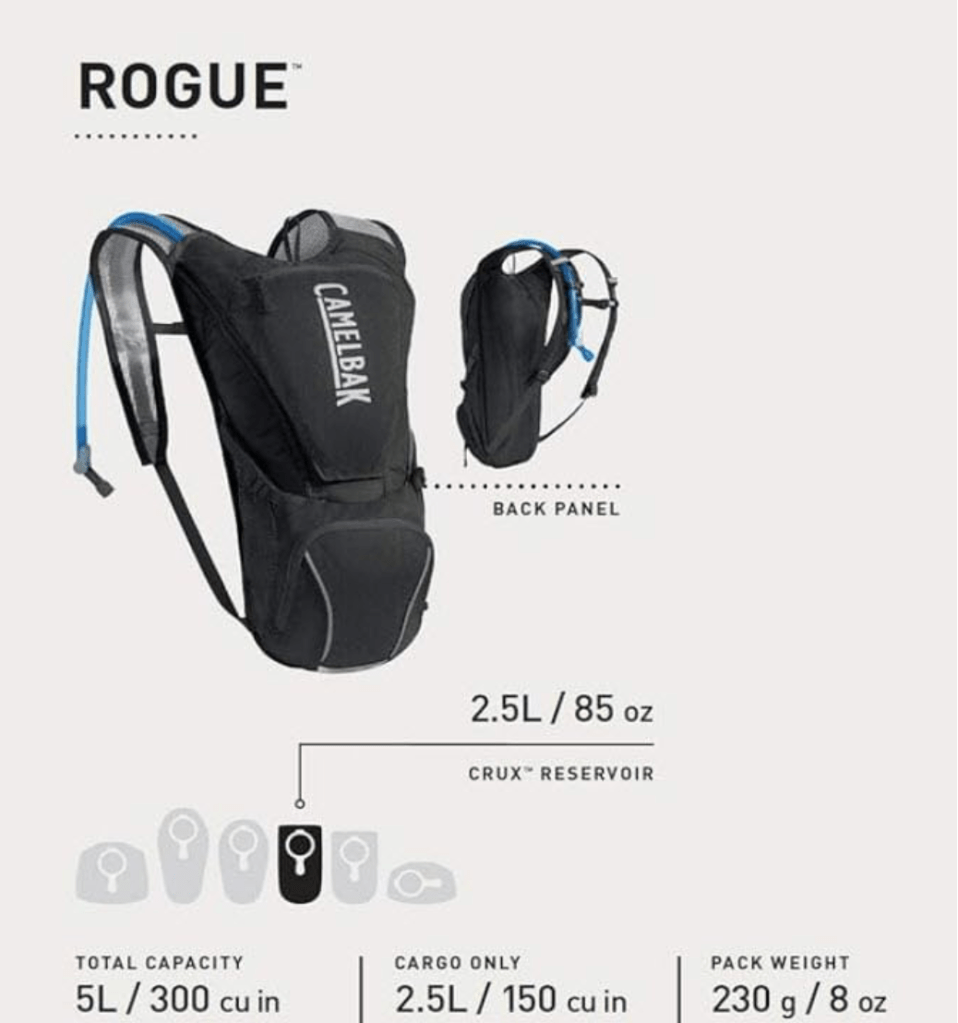
Nothing beats a Camelback for taking water with you on the go. Just fill it up after you get through security at the airport. Here’s my affiliate link for Amazon.
Final Takeaway
Peter Diamandis is all about optimizing performance, and for some, 3.5 liters of water is a smart goal. But the best advice? Listen to your body. If your urine is pale yellow, your energy is good, and you’re not constantly running to the restroom—you’re likely hitting your hydration sweet spot.
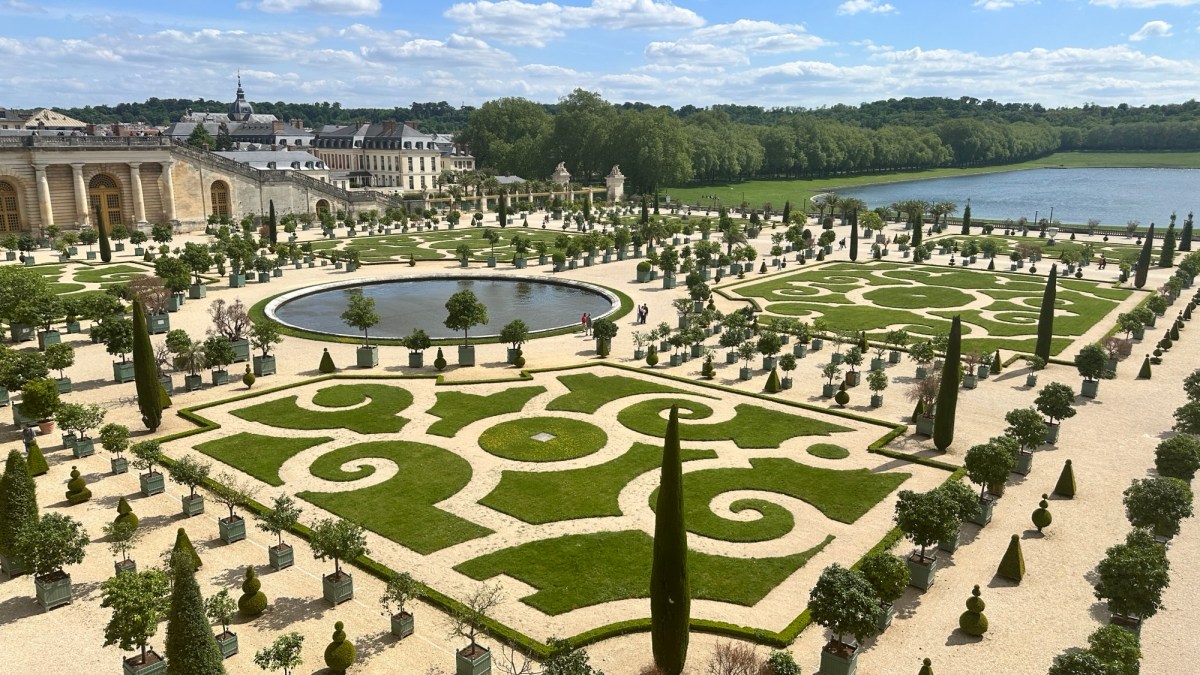
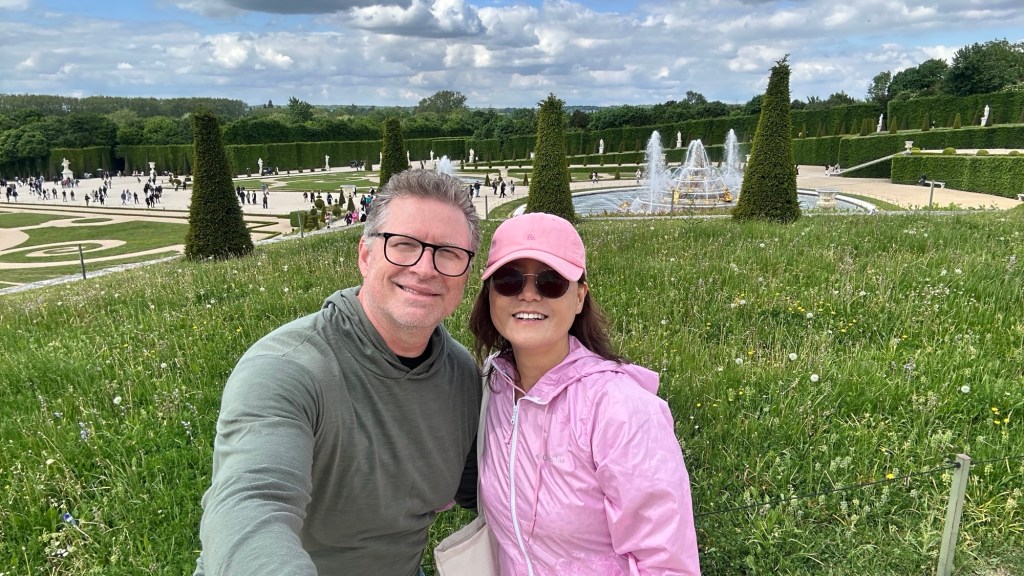
My wife Jen and I are enjoying the Palace of Versailles in France!
Traveling to Europe for a week with just a carry-on can simplify your journey–no checked bags, no extra fees, just you and a compact setup ready for adventure. On my last trip, I used a Ponchoo rolling backpack and a hanging travel organizer that transformed how I packed and stayed organized. Here’s how I made it work, plus some upgrades and lessons I’ll apply to my future travels.
Rancho Rolling Backpack
The Gear: A Ponchoo Rolling Backpack and a Hanging Travel Organizer
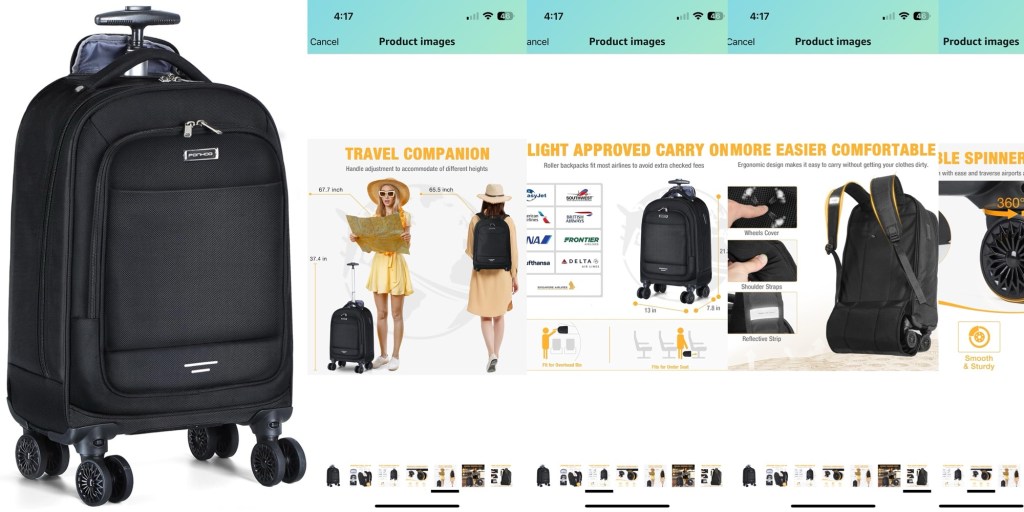
I traveled with a Ponchoo rolling backpack, a carry-on-sized bag (13 x 7.8 x 21 inches) with four 360-degree spinner wheels and a lightweight build. I found it on Amazon, and it’s designed to fit overhead bins for most airlines, which saved me from checked baggage fees. I loved its versatility–I could roll it through airports or carry it on my back over uneven streets, thanks to the ergonomic shoulder straps. (Amazon link)
Hanging Travel Organizer
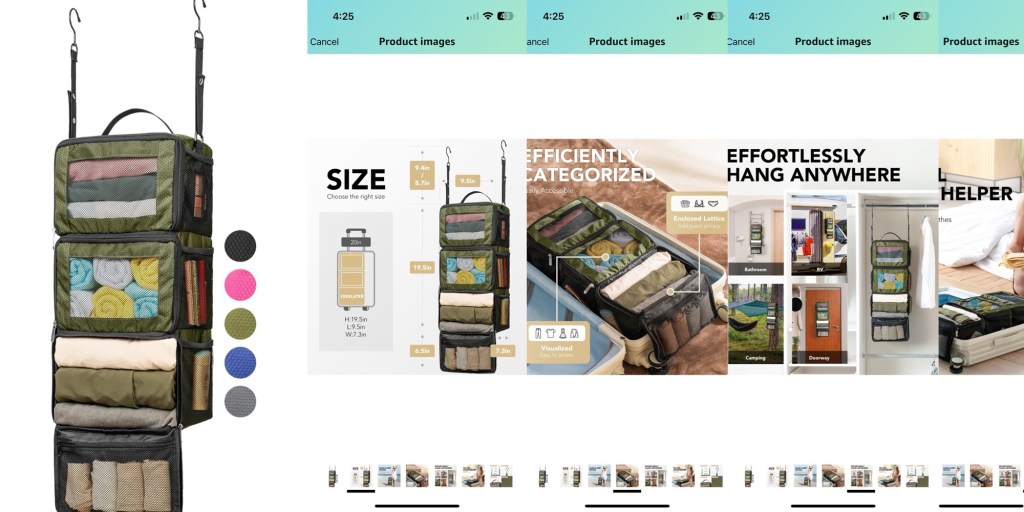
The real game-changer was a hanging travel organizer I also found on Amazon. It’s a well-constructed bag (19.5 x 9 x 7.3 inches when folded) with multiple compartments and mesh fronts for visibility. I could pull it out of my backpack, hang it on a hotel room rack using its hooks, and unfold it to 43 inches tall. This kept my clothes accessible–no digging through a suitcase. (Highly recommend: Amazon link)
Suitcase organizer
It was like having a portable closet, with sections for T-shirts, underwear, and more, all visible through the mesh. When it was time to move, I’d pack the bag while it hung, fold it back up, drop it into the backpack, zip up, and roll out. This system made hotel stays stress-free and kept me organized on the go.
Tip: Choose a carry-on with wheels and straps for flexibility, and pair it with a hanging organizer for easy access to your gear.
Packing Choices: Quick-Dry Athletic Wear
To keep my bag light, I packed strategically:
Black athletic T-shirts (90% Polyester, 10% Spandex): These wicking, stretchy shirts were perfect. They’re easy to wash, dry overnight, and look sharp for casual outings. (Recommend: Costco)
Athletic underwear (47% Viscose from Bamboo, 47% Polyester, 6% Spandex): Similar quick-drying material, comfortable for long travel days. (Recommend: Amazon)
One pair of blue jeans: The only item I didn’t wash on the trip, which got a bit ripe by the end.
Shorts and short socks: Compact and ideal for warmer weather.
Lesson Learned: Next time, I’ll toss Bounce fabric softener sheets into my dirty laundry bag to keep odors from items like jeans under control.
Washing Clothes in a Hotel Sink
Doing laundry on the road was easier than expected. I’d fill the hotel bathroom sink with water, add a bit of hotel hand soap, and toss in my T-shirts, underwear, and socks. Agitating and rubbing the clothes until the water turned cloudy showed they were getting clean. After rinsing thoroughly, I’d wring them out by hand. The next morning, I’d use the hotel hairdryer to dry stubborn spots like waistbands and neckbands, ensuring everything was ready to pack for the next stop.
Lesson Learned: A microfiber towel could make drying faster. Wrap wet clothes in it, twist tightly, and they’ll come out much drier, cutting down on air-drying time.
The Size Issue and a New Backpack Upgrade
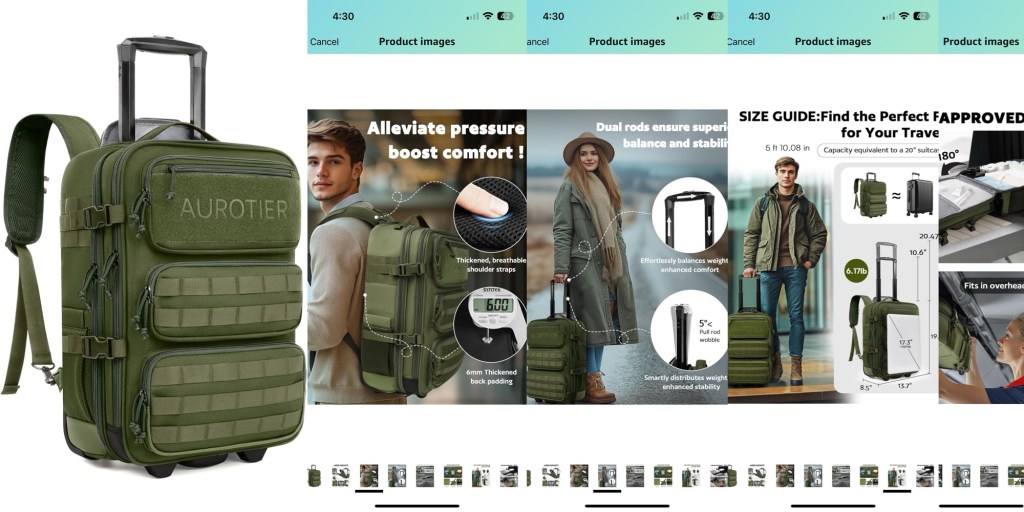
While the Ponchoo rolling backpack was great for shorter trips (like 3–4 days), it felt just a tad too small for a full week in Europe. At around 20–22 liters, it got cramped with a week’s worth of clothes, especially with bulkier items like jeans. I still loved the roll-or-carry design, so I ordered a slightly larger rolling backpack from Amazon–an AUROTIER Rolling Backpack (15.7 x 8.5 x 19 inches, also available on Amazon).
The new bag has arrived, and I’m excited to test it on my next trip. It offers more space (equivalent to a 20-inch suitcase, around 30–35 liters), thicker padded straps that are much more comfortable for my wide shoulders, and it opens up completely like a suitcase for easier packing and access. This upgrade should make future week-long trips much smoother.
Tip: Test your bag’s capacity before a long trip. If it’s cramped, upgrade to a larger carry-on that still fits airline size limits.
Next Step: Packing Cubes
For my next trip, I’m adding packing cubes to my setup. These will compress clothes in the hanging organizer, saving space and keeping things tidy when I unpack at hotels. They’re a small tweak for a big boost in organization.
Tip: Pick lightweight packing cubes that match your bag’s dimensions for a snug, efficient fit.
Why It Worked
Packing light with a carry-on forced me to be deliberate, which made the trip smoother and more enjoyable. The Ponchoo rolling backpack and hanging travel organizer kept me mobile and organized, while quick-drying athletic wear meant I could wash and re-wear clothes easily. Sink laundry was surprisingly effective, and with tweaks like fabric softener, a microfiber towel, and my new AUROTIER backpack, my next trip will be even better.
This system isn’t just about saving space–it’s about traveling with less stress and more freedom to soak in the experience. What’s your favorite carry-on packing hack? Drop it in the comments–I’d love to hear your tips!
After a wonderful visit to Korea this spring, we added an exciting second chapter to our journey: a five-day trip to Bohol, Philippines, arranged through Hanatour. The goal? To explore the island and see if it might be the right place for us to pursue scuba diving certification later in 2025.
We booked a tour package that included round-trip flights on Air Seoul, airport transfers, hotel accommodations at the Henann Tawala Resort, and a full slate of tours and activities. The value was excellent — about $600 per person, thanks in part to the strong dollar.
Our Air Seoul flight from Incheon to Panglao (TAG) was smooth and comfortable. Upon arrival, a Hanatour representative met us and drove us to Alona Beach Tawala Resort, where we settled in for our stay.
Though our resort didn’t have a fitness center, we quickly found a well-equipped gym at a neighboring resort and made time to work out each day — an important part of travel life for us!
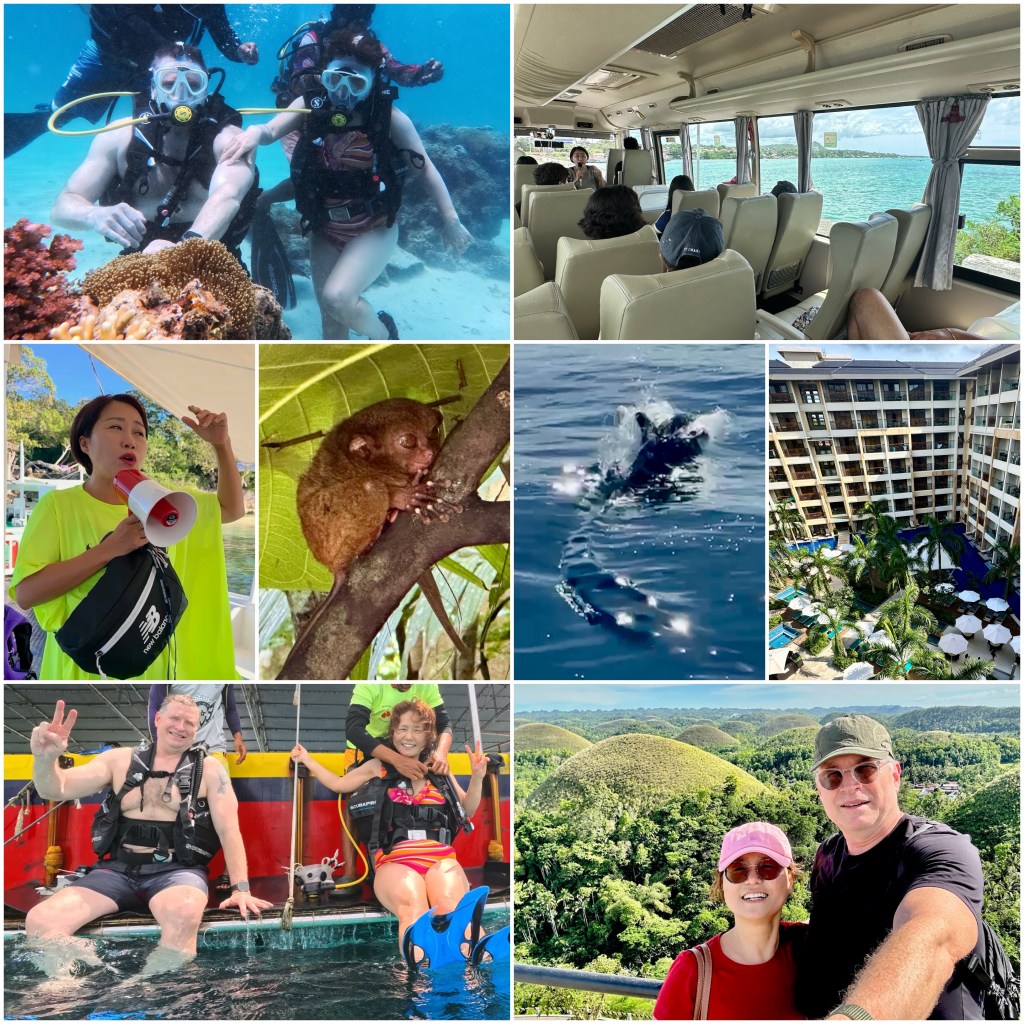
The week was packed with adventure, and Hanatour had arranged an impressive lineup of experiences that gave us a full taste of Bohol. Early in the trip, we suited up for our very first scuba experience — an introductory dive with a local instructor. We spent an hour underwater, floating beside coral and fish, and it was enough to convince us: we were hooked. This was the moment we decided to return later in the year to earn our full PADI certification.
Another morning, we set out on a boat to watch dolphins glide through the water at sunrise, followed by snorkeling with sea turtles in the clear, shallow reefs. Later that day, we joined an island-hopping excursion that brought us to Balicasag Island, one of Bohol’s most beloved snorkeling spots. The beach there was made entirely of tiny shells and coral fragments — unlike anything we’d ever seen. Walking barefoot across the shore was a tactile joy, and the surrounding ocean views were unforgettable.
On land, we explored the iconic Chocolate Hills, cruised gently down a jungle river while enjoying a delicious lunch, and visited the Tarsier Sanctuary to meet Bohol’s most famous residents — tiny, wide-eyed primates no bigger than your hand.
Because we were part of a Korean-language group tour, I leaned heavily on Jennifer for translation, but the Hanatour team made sure we felt included and cared for. Meals were served at a variety of local Korean restaurants, and every meal was hearty, familiar, and satisfying.
Throughout our stay, we enjoyed spectacular beach views, friendly and welcoming local people, and a wonderfully relaxed pace of life. Before heading back to the airport, we treated ourselves to a professional full-body massage — the perfect way to cap off a fantastic trip.
Our return flight to Korea on Air Seoul was just as seamless. We left Bohol feeling inspired and energized — and with a clear decision: we would return in November 2025 to pursue our PADI Open Water certification. Next time, we plan to book our trip directly rather than through Hanatour, though we were very satisfied with their service for this first experience.
Bohol captured our hearts. This was not just a beach vacation — it was the start of a new passion for scuba diving and a discovery of a place we know we’ll return to again and again.
When we started planning our spring trip to South Korea, I was excited to return to a country that has meant so much to us over the years — and this time, to experience it not just as a traveler, but as a retiree with new freedom to explore.
We booked flights on Air Premia, a high-quality discount airline flying direct from Newark International Airport (EWR) to Incheon (ICN). The price? About half what we would have paid on Korean Air out of Dulles — and the service was excellent. Price varies depending on the time of the year, but we snagged round trip tickets for about $1,000 each. Spacious seats, great crew — highly recommended.
Getting to Newark was easy: we rented a car from Enterprise in Edgewood, Maryland, drove to Newark, and dropped it off at the airport. On the way home, we reversed the process, though our Sunday return meant dropping the car at BWI, since the Edgewood location was closed.
Seoul: Family, Food, and Spring Surprises
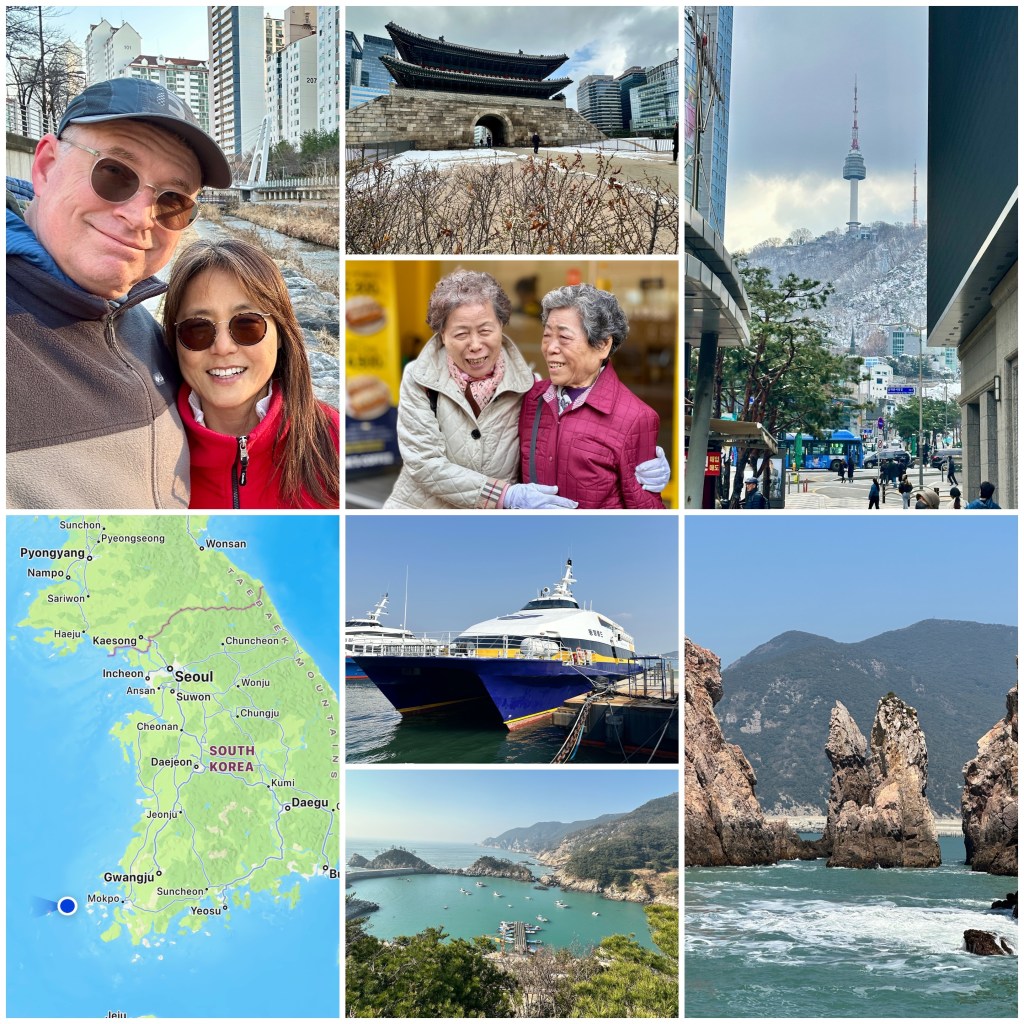
We started the trip in Seoul, staying with Jennifer’s family in the Sang-gye neighborhood.
Korea holds a special place in my heart — I spent five years here as a U.S. Army soldier, stationed at Yongsan Garrison in Seoul. It was during that time, in November 2000, that I met Jennifer — and Korea has been part of our story ever since.
One of the most joyful parts of this visit was quality time with Jennifer’s parents, now in their 80s, and reconnecting with her sister and extended family.
We explored the city’s markets, trails, and temples — and even had a late-season snowfall, which caught us by surprise! Next time, we’ll pack warmer for early spring.
Urban Hiking and Hidden Temples
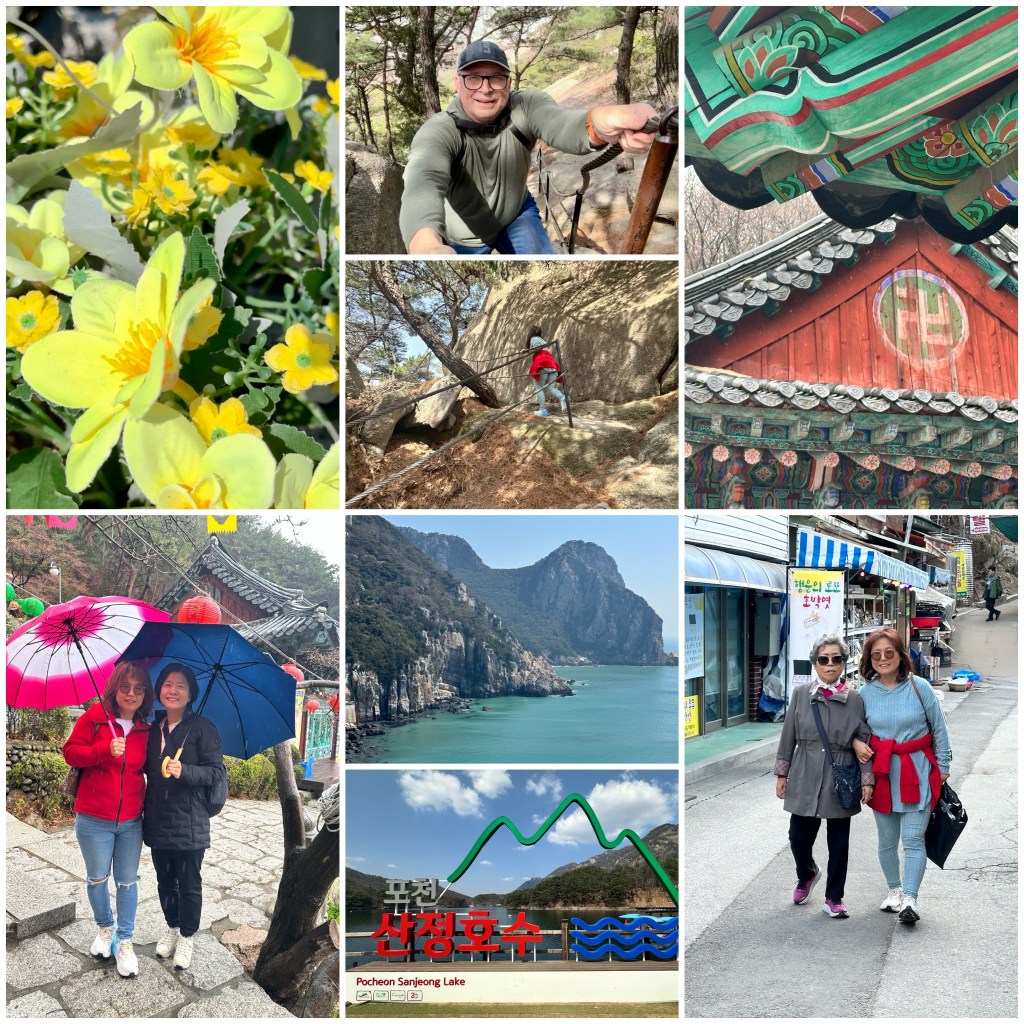
Seoul is a city of mountains, and we tackled one of the popular urban hikes near Sang-gye. The trail included sections with cables bolted into the rock, adding a bit of adventure — and the views from the top were worth every step. It’s always inspiring to see how many older Koreans tackle these trails with energy and skill.
Another highlight was a visit to a beautiful temple near Nowon Station. The temple graciously sent a shuttle van to pick us up, and after touring the colorful dancheong painted eaves and serene grounds, we enjoyed a simple temple meal. Sharing this day with Jennifer’s younger sister made it even more special.
Markets, Food, and Family Moments
No trip to Seoul is complete without wandering through its legendary markets. We spent hours in Namdaemun Market and Dongdaemun Market, soaking up the color and energy.
One meal stood out: an incredible grilled chicken ssam dinner near Sang-gye Station. The marinated chicken was grilled right at our table, along with garlic, peppers, and vegetables. We wrapped each bite in lettuce leaves with rice and a dab of gochujang — Korean comfort food at its finest.
A Personal Visit to Camp Humphreys
One of the more meaningful moments of this trip was our visit to Camp Humphreys in Pyeongtaek.
Most U.S. Army operations have now shifted south to Camp Humphreys, which has become the largest U.S. military base overseas. Visiting Humphreys for the first time as a retiree was a moving experience — seeing how the U.S.–ROK alliance continues to evolve, and remembering how much Korea has shaped our lives.
Island Adventures: Heuksando
Midway through the trip, we headed south for an island adventure.
We took the train to Mokpo, then boarded a ferry to Heuksando Island in the South China Sea. The ferry ride itself was beautiful — passing rugged coastline and fishing villages.
On Heuksando, we explored dramatic cliffs, coastal trails, and charming island streets. The seafood was as fresh as it gets, and the island’s remote feel made it a highlight of the trip.
Family Road Trip: Pocheon Sanjeong Lake
To round out the trip, we joined Jennifer’s parents, sister, and brother-in-law for a family road trip north to Pocheon Sanjeong Lake.
Nestled among forested hills, the lake offered peaceful scenery and crisp spring air — a perfect place to relax and reflect after our busy island travels.
Reflections
Every trip to Korea brings new memories — and this one felt especially meaningful.
Returning as a retiree, with the freedom to explore both old haunts and new places, gave us a fresh perspective on this country that’s been so central to our story.
We can’t wait to return again — and we’ll definitely fly Air Premia next time, too!
Closing
If you’re considering a spring trip to Korea, don’t hesitate — it’s a season of vibrant markets, crisp mountain air, blooming temples, and family warmth.
And if you’re a military retiree or former expat, going back to Korea can be a truly special journey — part homecoming, part adventure, always memorable.

 Time Traveler's Blog